
Adam Smith came up with the Invisible Hand theory (Adam Smith, Wealth of Nations, 1776) and flipped the world upside down, especially the world of ethics. “Invisible hand theory,” says that individuals are self-serving beings, and it is because of this self-interest, economies grow. Individuals work to maximize their utilities and the aggregation maximises social benefits. When this theory is linked with humanism (a philosophical stance that emphasizes the individual and social potential and agency of human beings), ‘reason’ (rationality as economists call it) becomes the driving force while ethics take a backseat. Humanism wants people to be creative, rational, and lead ethical lives without supernatural beliefs (Humanist International). But we see people doing the right thing all the time because they believe that otherwise, God would punish them. According to research conducted by Pew Research Forum in 2010, 84% of the world’s population believe in some or other religion (Global Religious Landscape, Research Centre, 2012).
Keeping this number in mind, supernatural beliefs are here to stay, and they should stay. Because the whole idea of separating ethical behaviour from supernatural beliefs is flawed considering humans are inherently self-interested beings. This narrative has been iterated and reiterated by multiple economists since the 18th century. Today all the economies have this value at the centre of all their operations and decisions. But this article is not about how capitalism works. Rather it is about embracing the fact that we care more about ourselves than others and how religious beliefs make our lives better. When it comes to survival or greed, our self-interest will overpower ethics unless we anchor it to something that will serve us.
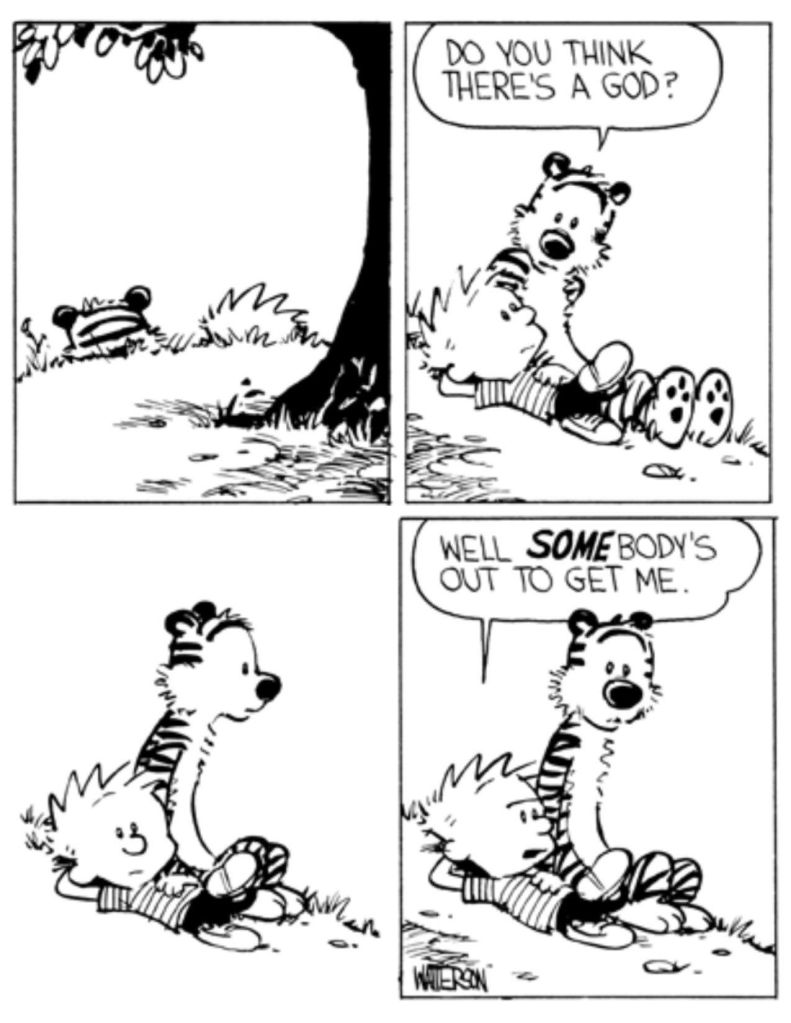
That anchor is the supernatural beliefs or faith in a life after death. The narrative of how our deeds in this life will determine what kind of life we will get to live in the next life restrains people from undertaking ugly actions. It is the expectation of some prize for acting selflessly is why people act generously. If people start to believe that there is no afterlife or there is no reward for doing something right or that they are not going to get anything in return for their material loss, then it is going to be man eats man.
To put this more simply, let’s take an example of someone having a million dollars. They could either donate it to an orphanage or better their lifestyle. What do you think he/she will choose? Before you answer the question, note that we are talking about a world without religion, and no one believes that there is a life after death. Everyone is operating on reason and science. If you answered that they will donate to an orphanage instead of bettering their lifestyle, then your reasoning is devoid of economic considerations.
In a world where people operate only on reason – the rational decision will be to maximize satisfaction. Why? Because the utility of donating it to an orphanage will reduce when there is no other future benefit except how it makes one feel about themselves. The rational decision would be to spend the money on bettering the lifestyle. In this hypothetical world, you cannot even hold anyone accountable for choosing the latter or call them greedy because they are only acting on reason. There is also a possibility that when people do not act on rationale they might be seen as less intelligent in this world.
In a world where religion is deleted or when people start believing in the YOLO (You only live once) lifestyle – we all will be in trouble. Because then people will try to maximize their satisfaction by hook or by crook, acting rationally would be the only ‘right’ thing to do. Further, supernatural beliefs over the years have shaped individual morals. It is passed down from generation to generation in the name of religion, or family legacy, etc. So, when we try to remove supernatural beliefs, we are indirectly removing morals, which are imbibed deeply into the minds of people and for starters is unrealistic.
Let’s consider lying. Lying is deemed to be unethical when the intention behind it is personal gain otherwise it is justified (The Morality of Lying, Encyclopedia Britannica). In our hypothetical world – personal gain is at the centre, which would mean lying for personal gain would become ethical. In the real world when someone questions – why is lying unethical? The most common answer is because it could hurt someone. Why is hurting someone immoral? Because it is a vice. Why is it a vice? Because God says so or because in the future this vice will come for you (karma) or you will suffer in the afterlife. It is impossible to separate ethical behaviour from supernatural/religious beliefs. Humans lead ethical lives because they are protecting themselves from loss or expecting a future gain. Hence self-interest and ethics are indivisible.
Humanism would work in a world where there is no economics and trade, and in such a world, advancing is improbable. When maximizing satisfaction is at the centre for individuals, supernatural/religious beliefs facilitate in leading ethical lives. Instead, as humanism propounds, if individuals start operating only on reason, this world soon would be a madhouse, and the definition of “right thing to do” would be flipped. Supernatural beliefs are integral to leading an ethical life. These beliefs need to be in harmony with reason to create a peaceful world where humans can progress and achieve equity.
 Sugar Words
Leave a comment